Loading image...

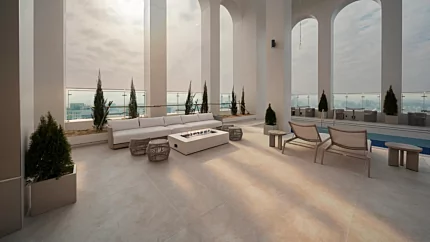
Wharf 65 Fire Table
Think of the fuel in your fire table as part of its design, not an add on. It shapes the flame you see, the warmth you feel, and whether the table can sit in an open garden, under a covered patio, or in the middle of a living room.
This guide walks through propane, natural gas, and bioethanol. It explains how each fuel behaves in real homes, from heat output and burn duration to installation work, safety standards, and indoor eligibility, so you can select a table and fuel combination that works across seasons and across different zones of your home.
Loading image...
Wharf 65 Fire Table
The fuel type you choose for a fire table determines where you can place it, how much heat it produces, what installation it requires, and whether you can use it indoors. That's not marketing framing. It's the physical reality of how each fuel behaves.
Propane fire tables run on liquefied petroleum gas stored in a refillable cylinder, typically housed within the table base. Heat output is high, at 65,000 BTU/h (19 kW) on EcoSmart Fire's gas burner configurations, with burn times of 8 to 20 hours per cylinder depending on flame height. The table is technically portable (wherever you can move the cylinder, you can move the table), but it's restricted to open outdoor use.
Natural gas fire tables connect permanently to your home's gas supply. Heat output matches propane at 65,000 BTU/h (19 kW), but burn time is effectively unlimited. The trade-off is a fixed footprint: the gas line ends where the table lives. Outdoor only.
Bioethanol fire tables burn plant-derived ethanol from a built-in reservoir. No external connection of any kind. Heat output sits at 20,433 BTU/h (6 kW) for EcoSmart Fire's AB8 burner, with burn times of 7 to 13 hours per fill depending on burner model and flame setting. The combustion is smokeless and produces no carbon monoxide in meaningful quantities, which is what makes indoor and covered-outdoor use possible.
Propane (G16T) | Natural gas (G16T) | Bioethanol (AB8) | |
|---|---|---|---|
Heat output | 65,000 BTU/h (19 kW) | 65,000 BTU/h (19 kW) | 20,433 BTU/h (6 kW) |
Burn time | 8–20 hrs (cylinder) | Unlimited | 7–13 hrs per fill |
Indoor eligible | No | No | Yes (with Safety Tray) |
Connection required | Tank + regulator | Permanent gas line | None |
Regulatory standard | ANSI Z21.97 / CSA 2.41 | ANSI Z21.97 / CSA 2.41 | EN 16647 / UL 1370 |
The BTU gap between bioethanol and gas is real and worth addressing plainly: gas patio fire tables produce roughly three times the heat output of bioethanol at equivalent burner sizes. For an open patio on a cold night with guests spread across a wide seating arrangement, that difference is felt. Gas wins the raw heat comparison.
The reframe that matters is this: fire tables are gathering furniture, not primary heating appliances. The question isn't which fuel produces the highest BTU number; it's which produces the right heat for your use case.
A 65,000 BTU/h gas burner radiates heat across a broad area, making it well suited to large open patios where wind dissipates warmth and where guests sit several metres from the flame. The U.S. Department of Energy's fuel properties comparison confirms propane at 84,250 BTU per gallon (lower heating value) and bioethanol at 76,330 BTU per gallon. The roughly 10% energy density difference per gallon only partly explains the real-world output gap; burner design and fuel delivery rate account for the rest.
Bioethanol's 20,433 BTU/h (6 kW) is genuinely warming at close range. Within a metre or two of the table, the radiant heat is noticeable enough to keep a covered outdoor dining area comfortable into the cooler months or anchor a living room gathering without the need for supplemental heating.
On burn duration: natural gas offers effectively unlimited flame time, constrained only by your gas supply. A propane cylinder provides 8 to 20 hours depending on flame setting and cylinder size. Bioethanol runs 7 to 13 hours per fill across EcoSmart Fire's burner range. For most residential entertaining, any of these figures is sufficient.
Where natural gas's unlimited supply becomes genuinely relevant is in commercial settings or for households that entertain daily and find cylinder management a friction point.
Loading image...

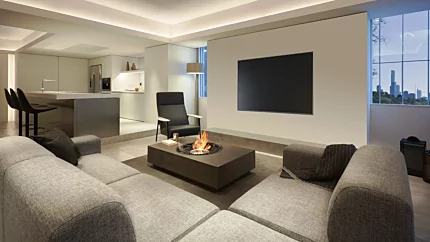
Martini 50 Fire Table
Bioethanol is the only fire table fuel type eligible for both indoor and outdoor use. Propane and natural gas fire tables are restricted to outdoor-only installation.
That single constraint reshapes every other decision in the placement conversation.
For open patios and gardens, all three fuels work. Gas options produce more radiant heat for large exposed spaces where warmth needs to travel. Bioethanol suits more intimate outdoor settings where smokeless combustion keeps the table surface and surrounding furniture clean.
Covered patio or pergola: This is where propane and natural gas run into a hard limitation. Gas combustion produces carbon monoxide, nitrogen dioxide, and other exhaust gases that accumulate under restricted overhead cover. Most manufacturers specify outdoor open-air use only, and local building codes in many regions prohibit unvented gas appliances under covered or semi-enclosed structures. The restriction isn't design conservatism. It's physics. Bioethanol, by contrast, is the natural choice for covered outdoor areas: smokeless combustion means no accumulation of harmful gases under a pergola or roof, and no soot settling on cushions and ceiling materials.
Indoor living spaces: Bioethanol only. EcoSmart Fire's AB8 burner requires an Indoor Safety Tray and AB8 Burner Efficiency Ring for indoor installation, along with a minimum room volume of 116 m³ (4,097 ft³) to ensure adequate air exchange. The European BS EN 16647 standard, to which EcoSmart Fire's bioethanol burners are certified, provides specific minimum room volume calculations per product category: a defined framework rather than vague guidance.
For homeowners with covered outdoor entertaining areas, screened porches, or open-plan living rooms where a fire feature would anchor the space, bioethanol is the only fuel in this comparison that says yes.
The practical differences in installation are where many homeowners encounter their first real surprise.
Natural gas demands the most upfront work. A permanent gas line must run from your home's supply to the table's location, which requires a licensed gas fitter, council permits in many jurisdictions, and coordination around trenching, site preparation, and inspection. According to HomeAdvisor's 2025 cost data, outdoor fire pit gas line installation runs $20 to $25 (USD) per linear foot, with total project costs commonly landing between $1,500 and $3,000 (USD) once trenching, permits, and a licensed plumber are factored in. The Hearth, Patio & Barbecue Association advises homeowners to plan gas line capacity for future appliances at the same time, because expanding a line after the initial installation is disruptive and costly. Once the line is in, the table's location is fixed.
Propane is the lighter lift. A tank, regulator, and hose connection, with setup possible in an afternoon. Initial costs sit between $500 and $1,000 (USD). The table can move around the outdoor space as long as the cylinder travels with it, though cylinders need regular monitoring and replacement. Both propane and natural gas installations are outdoor-only by their nature.
Bioethanol requires none of this. No gas line. No cylinder. No flue. No licensed trades. No permits. The Sidecar 24, at a compact 610 mm square and 49.94 kg, is genuinely portable in the way that description usually implies: pick it up, move it, place it somewhere different.
For indoor use, the AB8 Burner Efficiency Ring and Indoor Safety Tray are the only additions required. That's the complete installation list.
All three fuel types are safe when used with properly engineered, certified products. The distinctions lie in how each fuel's risks are managed and what certifications to look for.
Gas fire tables in North America are governed by ANSI Z21.97 / CSA 2.41, the standard for outdoor decorative gas appliances. The 2017 third edition introduced rain testing and an exposed-surface temperature cap of 78°C (172°F) to prevent contact burns. Wind resistance is tested at 16 km/h (10 mph) and 50 km/h (31 mph). Products carrying UL or CSA marks against this standard have passed these tests. Propane installations also fall under NFPA 58, which governs tank placement, storage, and ventilation requirements.
Bioethanol fire tables operate under different standards. In Europe, BS EN 16647 governs decorative bioethanol appliances, covering flame supervision, spill resistance, fuel handling, emission levels, and minimum room volumes. In North America, UL 1370 is the applicable standard; EcoSmart Fire's engineering team collaborated with Underwriters Laboratories to develop it through more than 100 laboratory tests. For Australian installations, the ACCC Safety Mandate specifies minimum device weights, footprint requirements, and flame arresters in fuel containers.
Bioethanol's smokeless combustion also provides a safety dimension that gas cannot match indoors: no carbon monoxide, no particulate accumulation, no soot residue on nearby furnishings. Covered and indoor use is possible precisely because the combustion byproducts don't create hazardous accumulation.
Loading image...


Sidecar 24 Fire Table
Beyond fuel type, there's a design argument for bioethanol fire tables that becomes clearer the more time you spend around one.
A smokeless fire table with no gas line running to it, no cylinder to conceal, and no permanent position in the yard is, first and foremost, a piece of outdoor furniture. The flame is part of what it does, not the only thing it does. Most models offer optional glass cover plates, so when the burner isn't in use the table becomes a coffee table or side table with a clean, uninterrupted surface. No cylinder housing visible at the base, no hose to step over.
Smokeless operation matters here too. A table that produces no soot means no residue settling on the glass cover plate, on adjacent cushions, or on the dining surface when you're entertaining. The table stays clean. You can sit close to it without your clothes absorbing smoke. Children and pets can be nearby without concerns about particulate exposure.
The portability dimension extends to entertaining layouts. A bioethanol fire table can anchor a garden terrace in summer, move to a covered patio as autumn arrives, and find its way into a living room or conservatory through the cooler months. That seasonal flexibility isn't possible with any gas-connected table, and it's a meaningful part of the ownership experience on a product you'll use for many years.
For smaller outdoor spaces, the dual-purpose quality of a compact bioethanol fire table is particularly valuable. Every piece of furniture on a modest terrace has to justify its footprint. A table that functions as a gathering centrepiece, a heat source, and a practical surface when the flame is off earns that space without qualification.
The decision comes down to three clear profiles.
Choose propane if you want high heat output on an open patio and aren't ready to commit to a permanent gas line. Propane offers genuine flexibility within an outdoor setting, with moderate setup costs and no infrastructure dependency beyond cylinder management. It suits occasional to regular use and works well for patios where the table's position might change seasonally.
Choose natural gas if you have an existing gas connection nearby, or you're prepared to invest in permanent infrastructure for a fixed outdoor entertaining area. Natural gas offers the lowest ongoing fuel cost once the line is in, and unlimited burn time suits long sessions without logistics. Charlotte Anthony at the Hearth, Patio & Barbecue Association notes that 49% of outdoor hearth product owners cite extended warmth as their primary motivation.
Choose bioethanol if placement flexibility matters: indoor, covered, or freely repositioned outdoors. If you're renovating without gas infrastructure, want to use your fire table under a pergola or in a living room, or plan to take it to a different home one day, bioethanol is the only fuel that accommodates all of those scenarios. The heat output is lower than gas, a genuine trade-off. For intimate gatherings in defined spaces, the warmth is adequate and the clean-burning quality adds practical value that raw BTU numbers don't capture.
EcoSmart Fire offers the same fire table designs across all three fuel types. That means the fuel decision doesn't constrain your design choice: the table you're drawn to is available in the fuel that fits your space. Explore the full range of outdoor fire tables to find the configuration that works for how you actually live.