Loading image...

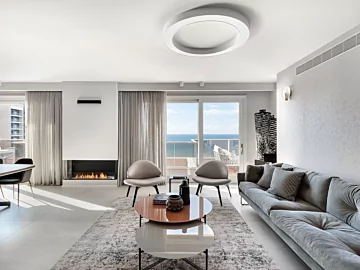 © Herbert / Architecture: @halel.arc / Photo: @odedsmadar
 Fireplace Inserts
Zero-clearance fireplaces
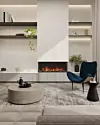
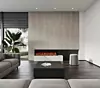
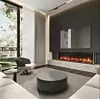
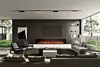
Create a social gathering point with an ethanol fireplace insert! A cosy and warm fireplace will perfectly complement your contemporary indoor or outdoor space. Available in different shapes, sizes and finishes, you're guaranteed to make memories around our ethanol fires.
Fireplace Insert Ranges


Models
Showing 18 items of 23
Single Sided Fireplace Inserts
Left Corner Fireplace Inserts
Right Corner Fireplace Inserts
Bay Fireplace Inserts
Double Sided Fireplace Inserts
Peninsula Fireplace Inserts
Island Fireplace Inserts
Bench Fireplace Inserts
Heritage 26SS Fireplace insert
Heritage 42SS Fireplace insert
Heritage 56SS Fireplace insert
Switch 44 Electric Fireplace
Switch 56 Electric Fireplace
Switch 68 Electric Fireplace
Switch 80 Electric Fireplace
Switch 96 Electric Fireplace
Switch 120 Electric Fireplace
Motion 30 Electric Fireplace






























Loading image...
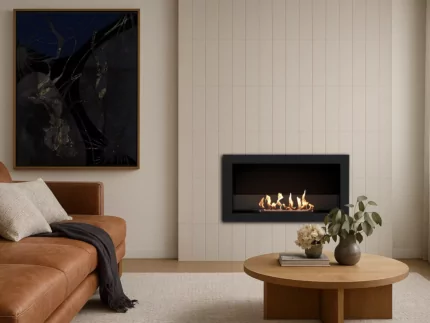
Premium materials
Constructed from mild steel with zinc-sealed, high-temperature powder-coat, toughened low-iron glass, and Grade 304 stainless steel burners, our Fireplace inserts are engineered for lasting performance and sophisticated style.
Zero clearance
Self-contained, zero clearance construction allows your Frame fireplace to be installed into wood or metal studs, providing installation freedom and flexibility for builders, architects, interior designers, landscapers and homeowners.
Loading image...
 © Design & Build: EcoLiv / Photo:
@kimkeltiephotography
© Design & Build: EcoLiv / Photo:
@kimkeltiephotography Complete design freedom
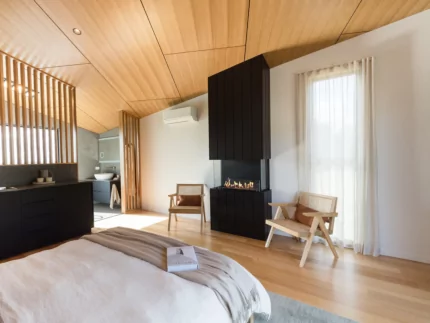
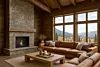
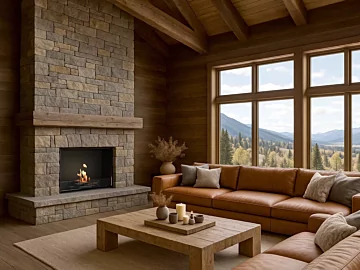
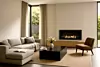
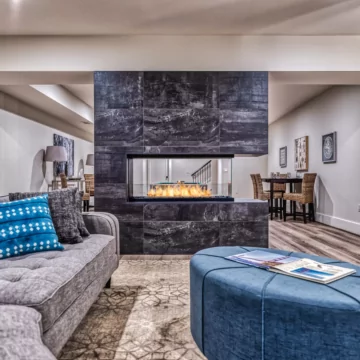
Place in virtually any room with complete customisation of finishing material. Whether integrating into marble, timber, concrete, or custom millwork, our Fireplace Inserts adapt beautifully to your aesthetic vision and architectural requirements.
Significant savings
With no flue requirement for gas lines, electricity, or venting, installation costs are dramatically reduced. Enjoy a streamlined process that eliminates multiple trades and complex approvals while maintaining premium quality and performance.
Loading image...
Loading image...

Loading image...

Our flame, your vision
Embrace your creative freedom. Fireplace Inserts enable you to use any wall material, combustible or not, ensuring your vision comes to life without limitations.
Loading image...
No flue, no chimney, no vent
Fuelled by clean-burning e-NRG bioethanol, our burners produce a beautiful orange flame without any smoke, soot or ash.
Loading image...
Global compliance
These models comply with existing standards in the USA, Europe, UK and Australia. O-TL listed to UL1370, EN 16647 BSI Certified and ACCC Safety Mandate compliant.
Styled by Our Clients
Loading image...

Loading image...

Loading image...

Loading image...

Loading image...

Loading image...

Related Collections
Learn More
FAQ's
What design materials and finishes can be used to surround an ethanol fireplace insert?
Zero-clearance construction gives a bioethanol fireplace insert genuine freedom at the face: marble, timber, concrete, and custom millwork all sit flush against the unit frame with no side or rear spacing required. The surround becomes a material decision, not a compliance one.
Approved face finishes include honed or book-matched marble, figured timber veneers, poured or board-formed concrete, and bespoke joinery. Tile, plastered masonry, brick, and natural stone work as substrate and typically as finish too, with non-combustible backing behind the cavity (EcoSmart Fire specifies vermiculite board, fibre cement, or steel framing lined with fire board). Matte surfaces like raked plaster or fluted stone read the flame as warm and painterly; reflective finishes like polished marble or blackened steel double the fire visually and throw light deeper into the room.
The only real constraint sits above the unit. EcoSmart Fire's installation guidelines specify a minimum of 600 mm [23.6 in] from the flame for non-combustible mantels or shelves, and at least 1,500 mm [59.1 in] for combustible materials including timber mantels, ceilings, joinery returns, and curtains. Everything beside and behind the firebox is yours to specify.
For retrofit projects, the wall finish can be reworked later without damaging the insert or the surrounding structure, which keeps the surround a live design decision rather than a permanent commitment.
Can a wall-mounted bioethanol fireplace be installed in a rental property?
Yes, a wall-mounted bioethanol fireplace can be installed in a rental property, provided you have written consent from your landlord or property manager.
Bioethanol models have a clear advantage in the rental context: no gas line, no flue, and no electrical connection are required. The fireplace runs entirely from bottled fuel, so there is no permanent utility infrastructure to negotiate. This removes the primary obstacles that would make a gas or wood-burning installation impractical or impossible in most rental agreements.
Installation does involve physical wall work. A recessed model requires a framed wall cavity; a surface-mounted model requires anchor fixings. Both create modifications that most tenancy agreements require prior landlord approval for. Obtain that consent in writing before any work begins.
What is the minimum wall space required for a wall-mounted bioethanol fireplace?
Minimum footprints by range:
- Frame (surface-mounted, zero clearance): 746 mm x 798 mm, 403 mm deep
- Flex (recessed cavity): 488 mm wide x 730 mm tall, 365 mm deep
- Heritage (hearth alcove): 860 mm wide x 910 mm tall, 539 mm deep
Are there specific clearance requirements?
EcoSmart Fire bioethanol fireplaces feature true zero-clearance design. At the back and sides, the appliance frame installs directly into wood or metal stud walls with no spacing required between the unit and surrounding combustible materials.
For mantels and surrounds fitted above or beside the unit, specific vertical clearance distances apply. These differ depending on whether the material is combustible or non-combustible; your model's support page provides the exact dimensions and diagrams for your configuration.
Each model specifies a minimum room volume for adequate ventilation. This is an air quality requirement rather than a physical clearance distance. Your product specifications or installer will confirm the threshold for your room.
Before installation, verify your wall cavity dimensions against the product's cut-out specifications to ensure tolerances align.
What is the ideal mounting height for wall fireplaces?
Ideal mounting height for EcoSmart Fire wall-mounted bioethanol fireplaces depends on how you want to experience the flame rather than a single fixed measurement. Position the burner at eye level when seated in your primary viewing area, typically 1,200–1,400 mm [47–55 in] from the finished floor, so the flame draws your gaze naturally as you relax.
Viewing angle is the real guide. If you'll stand in front of it, aim higher. If you're watching from a dining table, position lower. The beauty of bioethanol fireplaces is that ventless installation frees you from chimney positioning, ceiling-height constraints, or ventilation paths. Design comfort first, then build clearance into the architecture around it.
Maintain overhead clearance of 1,500 mm [59.1 in] from the flame to any combustible material (ceilings, shelving, curtains). Non-combustible mantels can sit as close as 600 mm [23.6 in]. These aren't rigid rules but sensible margins that protect finishes and ensure safe operation.
Your placement becomes a design choice driven by sightline and room proportion, not a compliance checklist.
How do you install a wall-mounted ethanol fireplace?
Recessed installation of EcoSmart Fire bioethanol fireplaces follows a straightforward three-phase process.
Construct your wall cavity to the specified cut-out dimensions, slide the appliance into the opening so the base sits securely on 50 × 100 mm [2×4 in] framing, then secure it via the mounting hole flanges using a power drill and screwdriver. Remove the transport brackets, complete your wall panelling around the insert, and the fireplace is ready for operation: no venting, no gas line, no electrician required.
The absence of utility connections is what makes recessed installation possible in spaces where traditional fireplaces cannot go: interior feature walls, under-window niches, between built-in cabinetry.
Framing above the appliance must be self-supporting, and the toughened glass windscreen slides into place before the decorative charcoal spreads around the appliance tray. Most installations are completed within an hour.
EcoSmart Fire trade specialists are available to review your design drawings at no cost and provide technical support throughout installation. Compliance with UL 1370 and EN 16647 standards ensures your installation meets all relevant safety requirements.
Do fireplace inserts require professional installation?
EcoSmart Fire's zero-clearance bioethanol fireplace inserts do not require professional installation. They are designed for confident DIY completion with comprehensive instructions.
The process has three steps: construct a timber-framed cavity to specified dimensions, mount the insert via the included mounting holes, and finish the surround with approved non-combustible materials. No structural modifications or specialist trades are needed.
Many customers choose to involve a qualified builder or interior designer, and this is where professional input earns its value. A tradesperson brings precise placement, tight integration with bespoke cabinetry, and a polished finish that elevates the overall design. If you're building or renovating, they can also coordinate installation timing across other trades on site.
EcoSmart Fire's trade specialists offer a free drawing review to validate your plan before work begins, giving you expert oversight without the cost of full professional installation.
Building permit requirements vary by jurisdiction; confirm local regulations before starting work.
Can you install a TV above a wall-mounted ethanol fireplace?
Yes, you can install a TV above a wall-mounted ethanol fireplace using one of three engineered design solutions. EcoSmart Fire bioethanol fireplaces emit minimal radiant heat and require no venting, making TV placement above the opening viable when proper spacing or shielding is applied.
The three approved approaches are: (1) a non-combustible mantel or ledge installed between the fireplace and TV to deflect radiant heat; (2) a recessed niche that sets the TV into the wall above the fireplace, creating physical depth separation from the flame; (3) sufficient setback clearance, positioning the TV well above the opening to allow heat to dissipate naturally.
Overhead clearance from the flame to any overhead surface must be 1,500–2,000 mm [59–78 in], depending on your burner model. Check your installation manual for the exact specification. The fireplace itself has zero clearance at the back and sides, but materials positioned above it, including your TV bracket, are not supported by the fireplace frame. Your TV bracket must be independently anchored to the wall structure or a structural element, not the fireplace surround. This independent anchoring ensures safe mounting and code compliance for load-bearing fixtures.
What is the minimum room volume for a wall-mounted ethanol fireplace?
Minimum room volume is determined by the burner capacity, not the fireplace footprint. EcoSmart Fire wall-mounted bioethanol fireplaces require between 40 m³ [1,413 ft³] and 90 m³ [3,178 ft³] depending on the model's heat output; compact models start at 40 m³, whilst larger designer series reach 90 m³. A few models in the largest range require up to 116 m³ [4,096 ft³].
These figures represent the air capacity needed to sustain clean combustion. EcoSmart Fire bioethanol fireplaces are engineered to operate safely in rooms of these volumes, meeting strict safety certifications. Natural air infiltration through doors, windows, and standard building construction provides adequate fresh-air exchange in rooms meeting the minimum volume.
The right fireplace scale often matches your room size naturally. A 40 m³ space (roughly 4 × 5 × 2 metres) suits compact models perfectly; a 90 m³ space (say, 6 × 5 × 3 metres) accommodates larger designer fireplaces. Rather than viewing this as a constraint, consider it a guide to matching the visual and thermal impact of the fireplace to the space itself.
Check your product's specifications for the exact minimum; the burner type determines the requirement, not the installation style.
What is an ethanol fireplace insert?
A zero-clearance ethanol fireplace insert is a self-contained bioethanol fire unit designed to drop into a wall cavity or an existing hearth, delivering a real flame without a chimney, flue, gas line or electrical connection. It burns liquid bioethanol fuel cleanly, producing only heat, water vapour and a small amount of CO2, with no smoke, soot, sparks or ash. That clean combustion is what sets it apart from a wood or gas insert, and what allows the unit to sit directly against timber or metal studs.
EcoSmart Fire builds ethanol inserts across three ranges, each suited to a different architectural setting:
- Frame: recessed wall inserts for indoor or outdoor single-sided viewing, built around a Grade 304 stainless steel burner and toughened glass screen.
- Heritage: a contemporary take on the traditional hearth and firebox, designed for classic fireplace openings.
- Grate: drop-in bioethanol grates that convert an existing wood-burning fireplace into a clean-burning fire, suitable for retrofit projects.
All ranges are safety-certified and designed for use in adequately ventilated indoor and outdoor spaces.