Loading image...


Ethanol Fireplaces
Create an instant talking point
Because bioethanol is clean-burning, EcoSmart Fire models do not need a chimney or a flue, or a utility connection – offering the ultimate in design simplicity and flexibility.
Whether you're creating a custom fireplace feature, renovating an existing fireplace, or looking for an out-of-the-box solution, we have an ethanol fireplace to suit your needs.
Ethanol Ranges


Loading image...


Environmentally-friendly
Fuelled by eco-friendly, readily available renewable energy – e-NRG bioethanol.
No flue, no chimney
Bioethanol is clean burning so you don't need to flue out any harmful emissions or install costly ventilation systems.
Loading image...
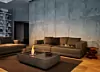

Architectural feature
Bioethanol’s lively dancing flame creates a striking focal point for interior designers.
Loading image...


Design versatility
Easily integrated into bespoke settings – from specially-made cabinetry, media units, walls, floating timber to stone benches and pillars.
The perfect fit
The streamlined design of the products synchronises effortlessly within award-winning architectural projects.
Loading image...

Loading image...
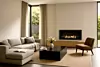

Ventless design
No venting required so ethanol fireplaces fit apartments, renovations, and compact spaces.
Supplemental heating
Add cozy zone warmth with modern fire features to complement your primary heating system.
Powered by e-NRG
Premium liquid fuel engineered for clean, consistent flames with low odour and zero smoke.

Related Collections
Learn More
Ethanol Fireplaces
Bioethanol Fireplaces
Ventless Fireplaces
FAQ's
Do bioethanol fireplaces produce carbon monoxide?
Bioethanol fireplaces produce no carbon monoxide during normal operation. Complete combustion converts bioethanol entirely into water vapour and carbon dioxide, and adjustable flame control across EcoSmart Fire's operating range does not alter this chemistry.
Carbon monoxide results from incomplete combustion, when insufficient oxygen prevents full oxidation of the fuel. EcoSmart Fire burners maintain complete combustion across the full output range. The flame arrestor integrated into the burner prevents fuel vapour flashback and sustains consistent burn conditions throughout each session.
Combustion by-products are carbon dioxide and water vapour, the same gases produced by normal breathing and candle combustion. UL 1370 (USA) and EN 16647 (Europe and UK) independently validate that EcoSmart Fire fireplaces meet safety thresholds for unvented indoor use.
Are bioethanol fireplaces environmentally friendly?
Bioethanol fireplaces are environmentally friendly in ways that go beyond zero emissions. They produce no ash, soot, or residue, leaving nothing to dispose of, and their ventless design eliminates the environmental cost of infrastructure like chimneys, flue systems, or gas plumbing. The fuel comes from renewable agricultural byproducts: sugarcane, corn, grain, and beetroot.
Because combustion releases only the CO2 that the crops absorbed during growth, the fuel cycle is carbon-neutral. When combined with the fireplace's design durability and longevity, a bioethanol fireplace becomes a low-impact choice for years of use. EcoSmart Fire products meet international safety standards (UL 1370-16, EN 16647) and carry sustainability certifications across manufacturing, reinforcing the brand's commitment to responsible production.
How do ethanol fireplaces work?
Ethanol fireplaces work by burning bioethanol fuel, a clean-burning renewable alcohol made from fermenting plant sugars, in a self-contained, stainless-steel burner. When you ignite the fuel with a lighting rod, it combusts at the fuel surface, producing heat, water vapour, and minimal CO₂; there's no smoke, soot, or ash.
The real innovation is in flame stabilisation. EcoSmart Fire burners use physical regulators, including steel wool in compact models like the AB3 and baffle inserts in larger burners, to control fuel evaporation and distribute the flame evenly. This not only stabilises the flame but optimises fuel efficiency, extending burn times to 7–13 hours depending on burner size and capacity.
Shutting down is equally straightforward. A slider or hinge mechanism closes off oxygen, extinguishing the flame in seconds without any residual smoke or smell. Because combustion requires no flue, chimney, or gas line, ethanol fireplaces are truly ventless; the burner stays sealed until you're ready to refuel.
This combination of clean combustion chemistry and elegant mechanical control is what makes ethanol fireplaces such a flexible heating and ambience solution.
Do ethanol fireplaces smell?
EcoSmart Fire ethanol fireplaces produce minimal odour during normal operation. You may notice a brief, faint scent when lighting or extinguishing, comparable to blowing out a candle. This is caused by denaturants in the fuel that prevent human consumption. The scent's intensity depends entirely on fuel quality.
EcoSmart Fire fireplaces are engineered exclusively for e-NRG Bioethanol, formulated to 96-97% purity with odour-minimising denaturants that reduce fusel alcohols (compounds creating unpleasant smells in lower-grade fuels) to barely perceptible levels. Using other fuels may affect performance and warranty coverage.
If you ever notice an unusual smell, the fix is straightforward: ensure you're using e-NRG Bioethanol and that the burner is clean and debris-free. Once properly fuelled, the smell will not return.
How does a ventless ethanol fireplace work?
A ventless ethanol fireplace works through complete combustion of bioethanol vapour, burning cleanly into heat, water vapour, and minimal CO₂ with no flue or chimney required. Unlike traditional fireplaces, no external ventilation infrastructure is needed.
Bioethanol is pure ethanol fuel (96–97% alcohol by volume), produced through fermentation of corn and plant sugars. When liquid bioethanol sits in the burner tray and is lit, it vaporises and burns above the burner surface, creating a real, visible flame. Because the process is nearly complete oxidation (ethanol vapour combining with oxygen drawn from the room), it generates no soot, smoke, or ash.
The byproducts, primarily heat, water vapour, and the same CO₂ humans exhale, discharge directly into the living space. This room-vented principle is what eliminates the need for a chimney or external vent. Because no heat is lost through a flue, ethanol fireplaces typically achieve thermal efficiency above 90%.
When bioethanol is sourced from sustainably managed renewable feedstock, the carbon cycle is considered carbon-neutral, as CO₂ released during combustion approximately balances what the source crops absorbed during growth.
How long will my ethanol fireplace burn?
Your EcoSmart Fire ethanol fireplace will burn between 8 and 13 hours on a full burner, with the exact duration determined by your flame setting. The range gives you control over the experience.
A lower flame setting extends burn time and creates a subtle, intimate ambience perfect for a long evening. Higher flame settings deliver a more dramatic visual impact and warmth, though they'll reduce runtime. Adjusting the flame via the slide or hinge mechanism changes oxygen supply to the burner, so you get more hours of gentle glow or fewer hours of bold presence, whatever suits the occasion.
You can also extinguish the burner mid-burn if needed. Simply turn it off and allow the burner to cool for 60 minutes before relighting. The vapours need that cooling time.
The burner capacity varies across our range, so compact models sit toward the lower end of the 8–13 hour spectrum while larger burners reach the upper end.
Are ventless fireplaces safe?
Ventless bioethanol fireplaces from EcoSmart Fire are safe when properly installed and operated according to guidelines. Unlike gas ventless fireplaces, bioethanol produces only water vapour, heat, and CO2 (comparable to a burning candle), with no carbon monoxide, smoke, soot, or harmful gases. EcoSmart Fire units include integrated safety features: a manual shut-off system, safety glass windscreens, and flame arrestor fuel bottles designed to minimise spill risk. Independently certified to UL 1370-16 and EN16647, the brand has deployed thousands of units across luxury hotels, resorts, and multi-residential buildings globally for over two decades. Proper room sizing and adequate ventilation are essential; refer to product specifications for your model's requirements.
Can you cook on a bioethanol fireplace?
Bioethanol fireplaces are purpose-engineered as decorative appliances, delivering real, adjustable flame ambience without a chimney, gas line, or installation. They are not designed for cooking.
Their burners produce variable, dancing flames optimised for atmosphere, not the consistent, controlled heat that food preparation requires. The burner containers are designed to display flame elegantly, not for direct food contact. There are no temperature controls, cooking grates, or heat-resistant surfaces suited to cookware placement.
EcoSmart Fire bioethanol fireplaces are UL-listed as ventless decorative appliances, which is what they do best: transforming indoor and outdoor gathering spaces with real, clean flame that is immediate, zero-installation, and endlessly adaptable to any setting.
What is the heat output of a ventless ethanol fireplace?
EcoSmart Fire ventless ethanol fireplaces deliver heat output ranging from approximately 2.5 kW to 6 kW (8,500–20,433 BTU/h), depending on burner size. Heat output correlates directly to burner dimensions: smaller configurations produce around 2.5 kW and heat zones of approximately 20 m² [215 ft²], while the largest burners reach 6 kW and warm spaces up to 60 m² [645 ft²] or larger.
Heat output is adjustable in real time via baffle inserts, so you are not locked at maximum output. You can dial flame intensity up or down to match your comfort needs. This matters for efficiency: over 90% of the heat generated stays in the room, as there is no flue to lose it through.
Fuel consumption ranges from approximately 0.5 L/h on lower settings to 2+ L/h at full output, with operating costs around USD 1.50 per hour depending on burner size and flame setting. For sizing, minimum room volumes start at 40 m³ [1,413 ft³] for the smallest burners, scaling up to 116 m³ [4,097 ft³] for the largest. Match your space volume to burner size to ensure comfortable zone heating.
What gases and emissions does a bioethanol fireplace produce?
Bioethanol fireplace emissions are limited to heat, water vapour, and a small amount of carbon dioxide, with no carbon monoxide, smoke, soot, or ash produced during combustion. The CO2 released is roughly equivalent to two burning candles, which means correctly sized rooms maintain clean indoor air without a flue or chimney.
Clean combustion does depend on fuel purity. High-grade e-NRG bioethanol burns as a complete reaction, producing a steady orange flame from start to finish without the residues that lower-purity fuels leave behind. That's why EcoSmart Fire bioethanol fireplaces won't stain ceilings, dull nearby finishes, or leave ash to clean up between uses.
What the by-products look like in practice:
- Water vapour: a slight, imperceptible rise in humidity, not visible condensation in a correctly sized room
- Carbon dioxide: trace amounts, comparable to candlelight at the same output
- No particulates: no smoke, no soot, no ash, no odour
Ventilation is about keeping fresh oxygen available for combustion, not venting harmful gases. Each burner has a minimum room size, from the VB2 at 45 m3 [1,589 ft3] up to the AB8 at 116 m3 [4,097 ft3], so adequate air supply is a matter of considered installation